
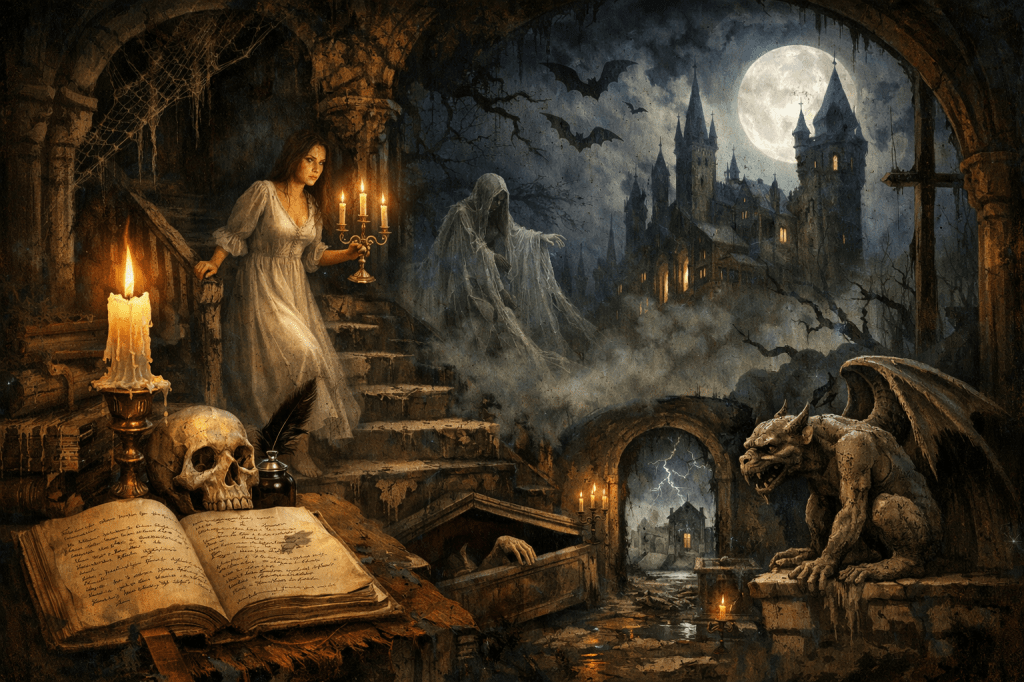
There is something deliberate about the way a Gothic reading list forms.
This is not a casual TBR. It’s a commitment to shadowed interiors, moral unease and stories that refuse to stay comfortably resolved. Together, these books trace the evolution of Gothic literature from its crumbling medieval origins to its modern psychological afterlives.
The Foundations: Where Gothic Began
Every descent has an entrance.
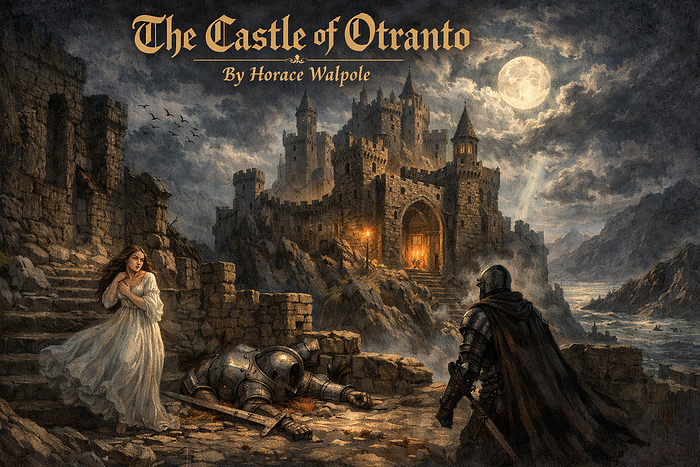
The Castle of Otranto — Horace Walpole
Often credited as the first Gothic novel, this book is where the genre announces itself: castles, prophecies, ancestral guilt and exaggerated emotion. It’s theatrical, excessive and unapologetic. Reading it isn’t about subtlety, it’s about understanding the blueprint from which everything else emerged.
The Mysteries of Udolpho & The Italian — Ann Radcliffe
Radcliffe refined what Walpole introduced. Her Gothic is quieter, more psychological, built on atmosphere rather than spectacle. Suspense stretches endlessly and fear is anticipated rather than delivered. These novels are essential for understanding the Female Gothic where terror is internalised, reason wrestles with imagination and women navigate danger through perception rather than force.
Transgression and Obsession
If early Gothic hinted at danger, these novels walk directly into it.
The Monk — Matthew Lewis
Few Gothic novels are as provocative as The Monk. It is excessive, transgressive and deeply unsettling. Lewis pushes the genre toward moral collapse and religion, repression, sexuality and power unravel spectacularly. This is Gothic with its gloves off.
Melmoth the Wanderer — Charles Maturin
A novel obsessed with damnation, time and impossible bargains. Melmoth stretches the Gothic across continents and centuries, asking what despair looks like when it becomes eternal. It’s dense, philosophical, and haunting in a quieter, more existential way.
Science, Duality, and the Unstable Self
Here, Gothic turns inward.
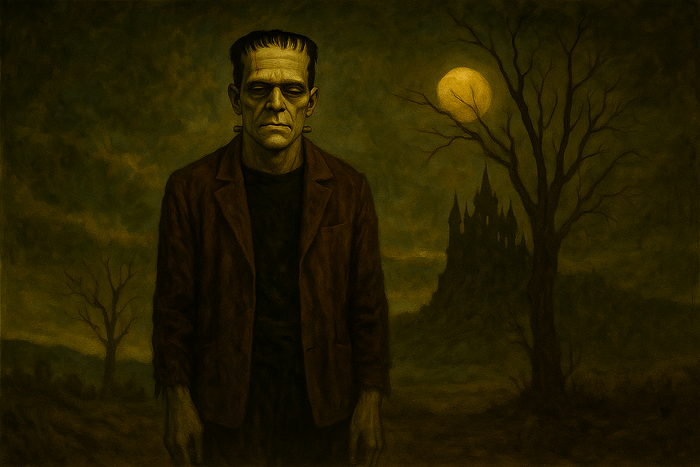
Frankenstein — Mary Shelley
A cornerstone of both Gothic and science fiction. Its a meditation on creation, responsibility, abandonment and ambition. Shelley’s Gothic is intellectual, ethical and emotionally devastating. It changes how one reads everything that follows.
The Strange Case of Dr Jekyll and Mr Hyde — Robert Louis Stevenson
Compact and devastating, this novel distils the Victorian fear of the divided self. Respectability versus desire. Public virtue versus private impulse. The Gothic moves into the mind and it never fully leaves.
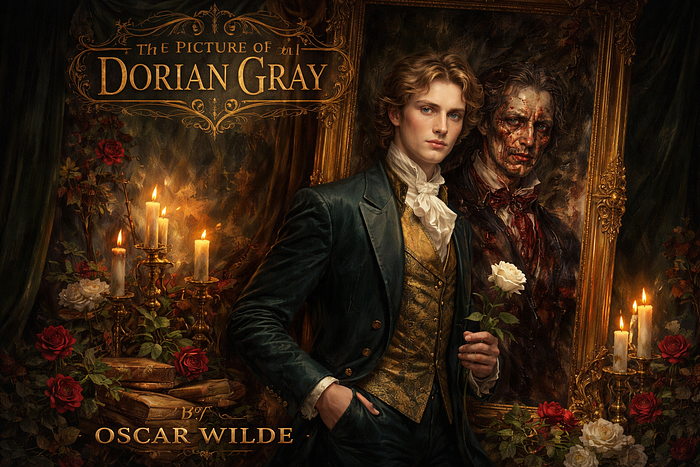
The Picture of Dorian Gray — Oscar Wilde
Beauty, corruption and moral decay wrapped in elegance and wit. Wilde transforms Gothic horror into something aesthetic and philosophical. The terror here isn’t death but permanence.
Blood, Desire and the Gothic Outsider
These novels explore otherness, immortality and forbidden intimacy.
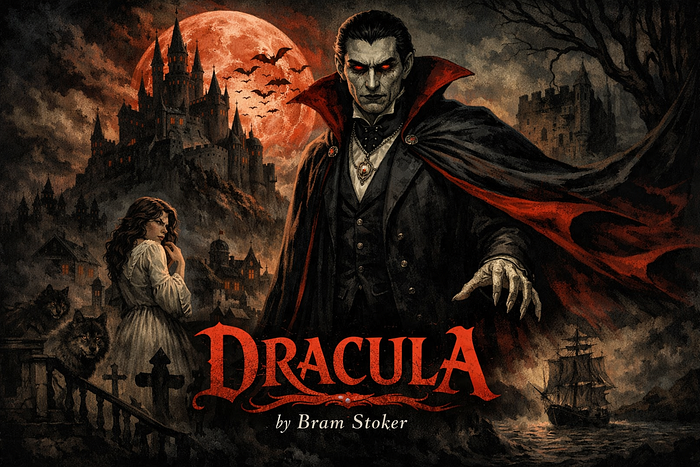
Dracula & Dracula’s Guest and Other Weird Stories — Bram Stoker
Stoker’s Gothic is layered with anxiety about invasion, sexuality, disease and modernity itself. Dracula is both deeply mythic and strikingly modern, while the short stories extend its atmosphere into strange, fragmented spaces.
Carmilla — Sheridan Le Fanu
Intimate, unsettling and quietly revolutionary. Carmilla predates Dracula and introduces a Gothic vampire that is sensual, ambiguous and psychologically invasive. It’s a small book with a long shadow.
Interview with the Vampire — Anne Rice
Here, the Gothic becomes confessional. Rice gives the monster a voice and with it, memory, guilt, longing and philosophy. Immortality is shown as endurance rather than power.
The Gothic at Home: Women, Rooms and Haunted Interiors
These novels shift the Gothic from castles to domestic spaces.
Wuthering Heights — Emily Brontë
Violent emotion, obsession and landscape entwined. This is Gothic passion stripped of romance. Love here is destructive, cyclical and inescapable.
Jane Eyre — Charlotte Brontë
A Gothic novel disguised as a bildungsroman. Secrets in the attic, moral trials, emotional restraint and the slow assertion of selfhood. The Gothic becomes a framework for autonomy.
Northanger Abbey — Jane Austen
Playful, ironic and deceptively important. Austen dismantles Gothic excess while defending imagination itself. It’s a novel about learning how to read darkness.
Modern Echoes: The Gothic Lives On
The Gothic doesn’t end. It mutates.
The Woman in White — Wilkie Collins
A bridge between Gothic and sensation fiction. Identity theft, confinement and surveillance drive the terror. This is fear structured by systems rather than spectres.
The Haunting of Hill House — Shirley Jackson
Psychological Gothic at its finest. The house may or may not be haunted, but the mind certainly is. Jackson proves that ambiguity is often more terrifying than certainty.
The Historian — Elizabeth Kostova
A modern Gothic novel steeped in research, archives and historical obsession. It treats the past as something alive, dangerous and unfinished.
Why This TBR Matters to Me
This list is tracing a lineage of fear, desire and moral unease. About understanding how Gothic literature has continually adapted to express what societies struggle to articulate directly.
2025 is the year I fell in love with Gothic literature, and I dont plan on falling out, ever. I still have so much to read, to fully grasp the beauty of this genre. I know the article says TBR, but I’ve read about a quarter of the titles mentioned in this article. I’m excited to get started on the rest.
If you’re interested in exploring gothic literature, this TBR is your way in.

 Honey & Prose 🍯🌸
Leave a comment