
Before the gleaming roads of Rome reached the misty shores of Britain, the island was a patchwork of tribal societies, verdant forests, and oral traditions that would echo in English storytelling for centuries. Understanding this pre-Roman world is key to appreciating the foundations of medieval English literature.
Britain has a long and rich history. Archeologists have found evidence of human presence of pre historic, nomadic hunter gatherers dating back to roughly 900,000–950,000 years ago, and they are believed to be the earliest settlers in England. Agriculture came to England around 4000 BC from the middle east where it originated. This led to permanent settlements, and structures like the Stonehenge.
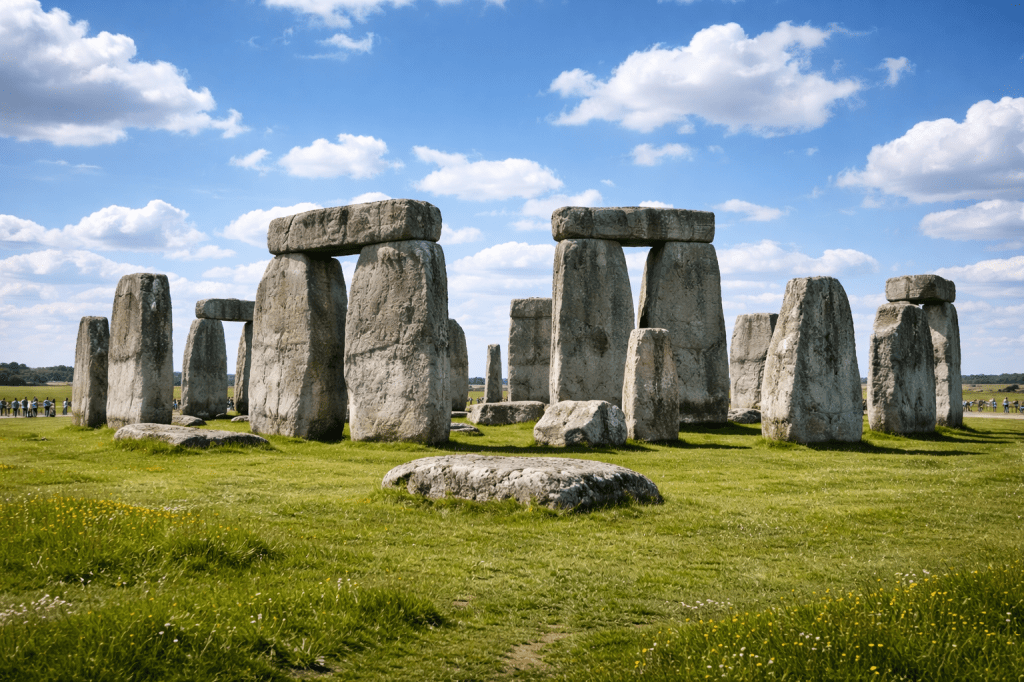
The next major change to English civilization comes from the rise of Celts around 1200 BC. Britain was home to a variety of Celtic tribes, each with its own territory, customs, and leadership. Names like the Trinovantes, Iceni, and Brigantes hint at a landscape as politically complex as it was beautiful. Chiefs ruled through loyalty, alliances, and sometimes sheer force, while the common people farmed, hunted, and traded along rivers and coastal ports.
Despite their decentralized rule, these tribes shared cultural threads: they spoke related Celtic languages, crafted intricate jewelry and metalwork, and celebrated their gods with elaborate ceremonies.
Religion in pre-Roman Britain was deeply entwined with the natural world. Sacred groves, rivers, and hilltops were considered holy. At the heart of Celtic spiritual life were the Druids, priestly figures who served as mediators between gods and people. Druids were not only religious leaders—they were teachers, judges, and historians, preserving oral traditions and genealogies.
It’s in these oral stories and mythic frameworks that we can trace the roots of English narrative traditions, long before written records arrived.
Everyday life revolved around agriculture and seasonal cycles. Villages clustered near fertile land, where families raised crops and livestock. Trade existed, too: amber, tin, and other raw materials moved across Europe, connecting Britain with distant shores. Craftsmen and artisans produced pottery, metal tools, and decorative objects that reveal a sophisticated sense of aesthetics.
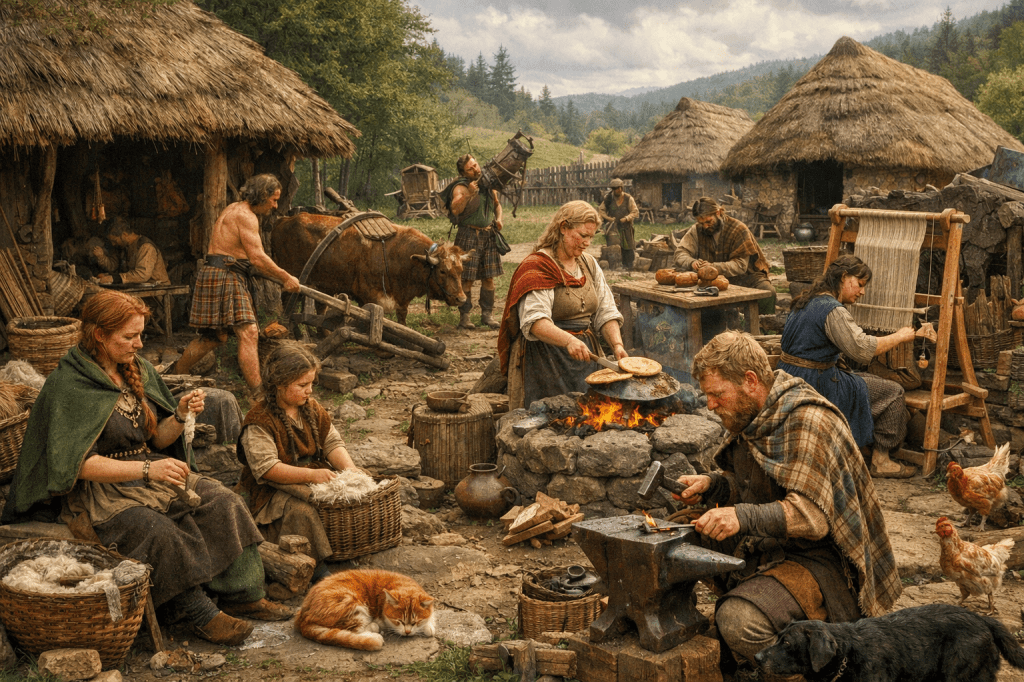
Although they left no novels or poetry in writing, the Celts were master storytellers. Tales of heroes, battles, and supernatural beings circulated orally, recited around fires or at festivals. These stories that were improvised, embellished, and shared had laid the groundwork for the literature of later centuries, influencing everything from Arthurian legends to epic poetry.
Even before the full Roman invasion, Britain had some exposure to the wider world. Traders and explorers introduced coins, Roman pottery, and new ideas. In 55 and 54 BCE, Julius Caesar conducted two brief expeditions, glimpsing the island and its people. Though these invasions were temporary, they foreshadowed the profound changes to come under Claudius’s conquest nearly a century later.
What does all this have to do with Literature?
While no books survive from pre-Roman Britain, the oral stories, heroic tales, and rituals formed the backbone of early English storytelling. The motifs of loyal warriors, feuding tribes, and supernatural encounters carried forward into later texts like Beowulf and the Arthurian romances, even influencing how medieval audiences imagined history itself.
In other words, every epic, every legend, every poem in later English literature is built on the foundations laid in these ancient forests, rivers, and tribal halls.
How do we know this to be true?
Direct written records from pre-Roman England are almost nonexistent, but we know about the literature through:
- Later Celtic texts from Wales, Ireland, and Brittany.
- Archaeological inscriptions (like ogham stones in southwestern Britain).
- Roman accounts (like Julius Caesar’s Commentarii de Bello Gallico) describing local customs and myths.
As we move forward in this series, we will explore how Rome transformed Britain and how the literary seeds planted in Celtic Britain began to take shape under Roman influence. From Latin inscriptions to the earliest Christian texts, Roman Britain set the stage for a millennium of English storytelling.
Next in the series: Roman Britain. The story of how Rome reshaped an island and its people, leaving traces that survive in both history and literature.

 Honey & Prose 🍯🌸
Leave a comment