After centuries of tribal rule, Britain’s history took a dramatic turn in 43 AD, when the Roman Empire launched a full-scale invasion under Emperor Claudius. Over the next few centuries, Roman influence transformed the island—its towns, roads, religion, and even daily life—leaving legacies that would echo through medieval literature.
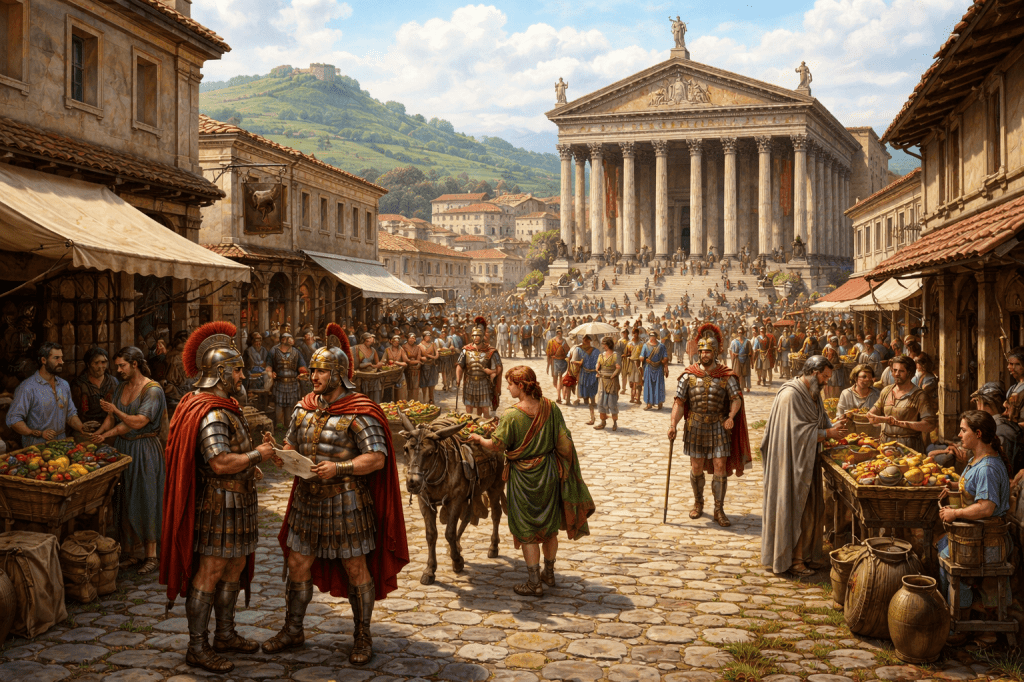
In 55 BC and 54 BC under the Roman general Julius Ceasar, Romans led two invasion attempts to Britain but they were not successful in establishing a stronghold in the island, and had to return back to the continent. But Rome never stopped looking at Britain as their next conquest. Almost a century later, Emperor Claudius invaded England and managed to establish Roman rule in the southern lands up to the banks of river Thames.
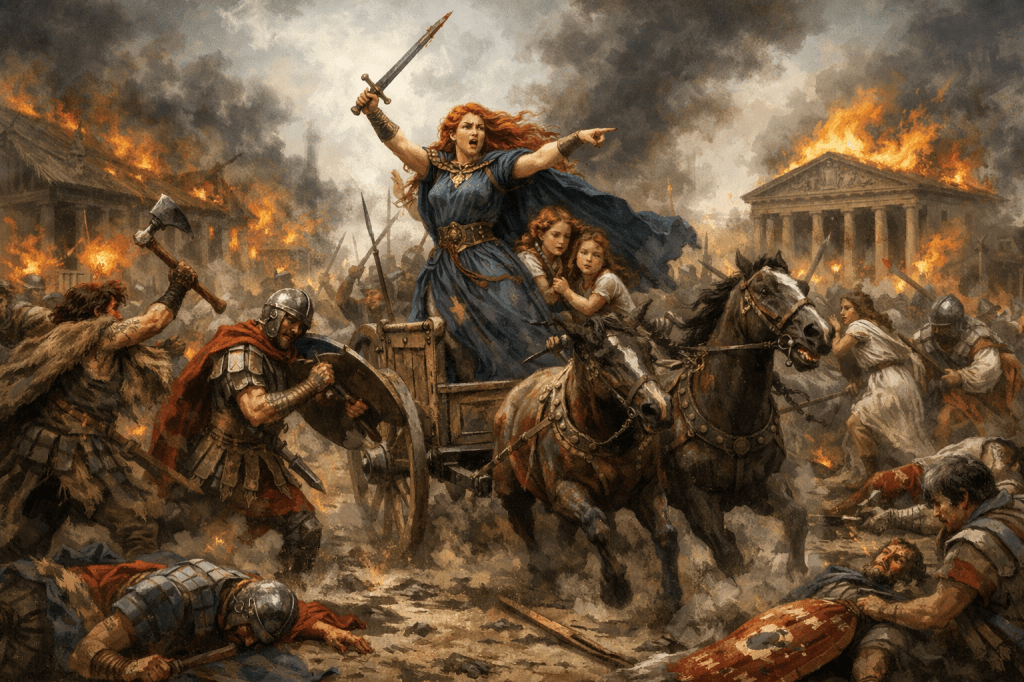
It took the Romans another 40 years to establish their power in the rest of the northern lands, delayed by the revolt of Boudicca in 60AD. The Boudican revolt was an armed uprising by native Celtic Britons against the Roman Empire during the Roman conquest of Britain. It was led by Boudica, the Queen of the Iceni tribe.
By the end of the 1st century AD, however, Rome has established its power in the whole of England. The conquest was not just about subjugation; it was about integration. Roman towns, laws, and trade networks reshaped the island, turning Britain into a provincial outpost of one of history’s greatest empires.
Cities like Londinium (modern London), Camulodunum (modern Colchester), and Verulamium (modern St Albans) became centers of administration, commerce, and culture.
Romans introduced:
- Stone roads connecting towns across the province
- Baths and amphitheaters as social hubs
- Temples and forums reflecting Roman religion and civic life
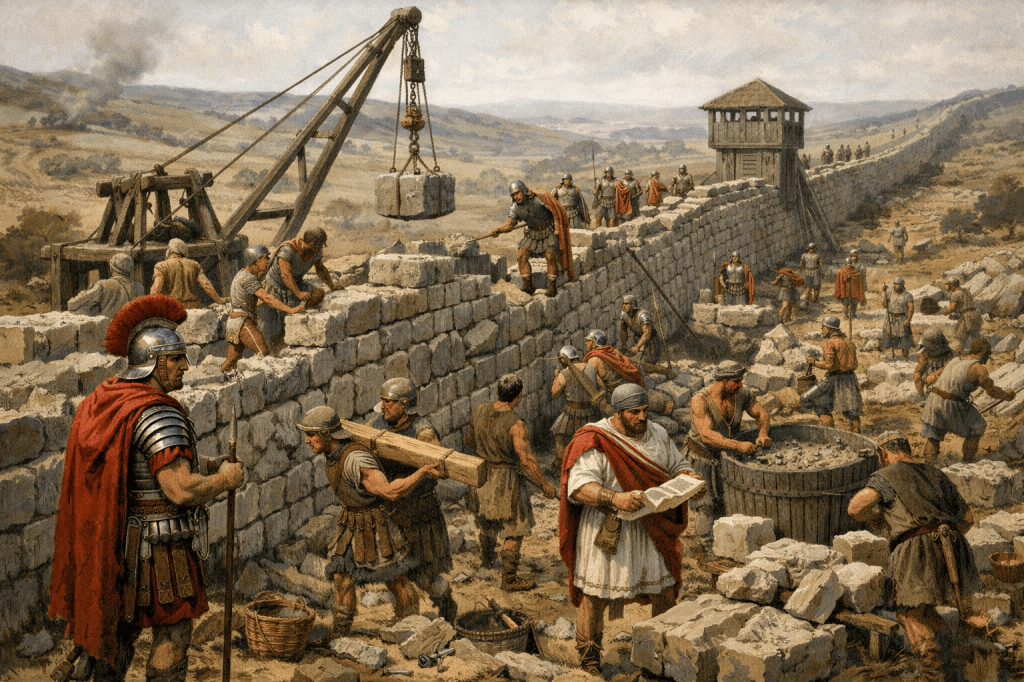
One of the most iconic constructions was Hadrian’s Wall, a massive frontier fortification built in the 120s AD to protect Roman settlements from northern tribes.
Life in Roman Britain varied greatly depending on class and location.
- Urban dwellers enjoyed tiled houses, public baths, and markets.
- Farmers in the countryside adapted Roman techniques to agriculture.
- Traders and artisans supplied goods ranging from pottery to imported wine and olive oil.
Latin became the language of administration, inscriptions, and some literature, influencing the linguistic landscape of Britain long after Rome’s departure.
Roman Britain was religiously diverse. Celtic gods coexisted with Roman deities, and later, Christianity began to spread, laying the seeds for the religion that would dominate medieval England. Figures like Constantine the Great, who granted tolerance to Christians across the empire, indirectly influenced Britain’s spiritual and literary trajectory.
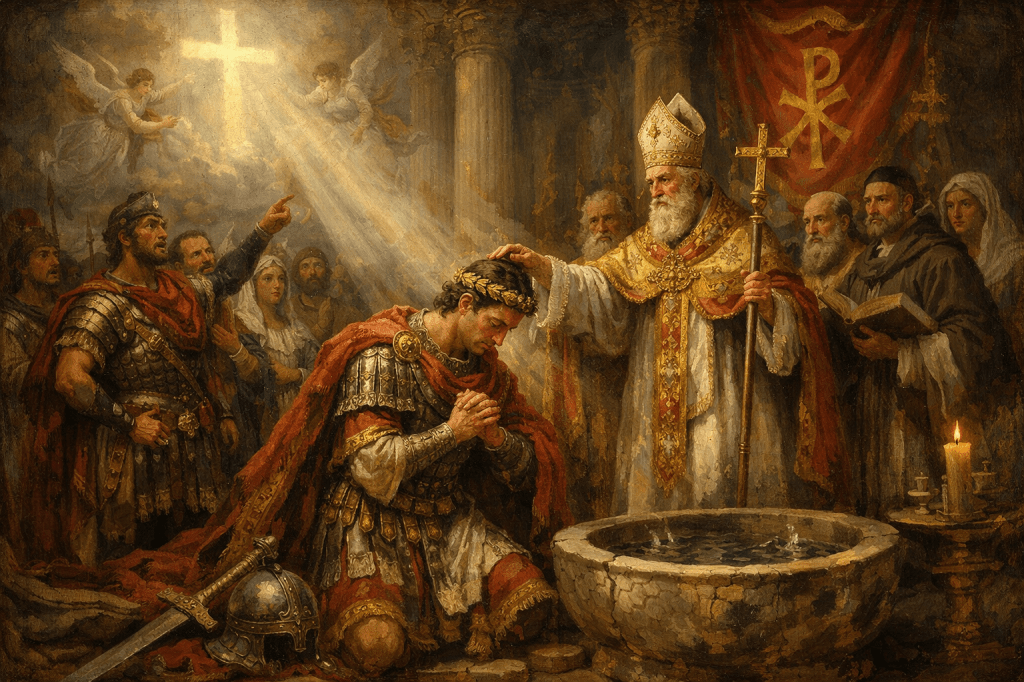
Culture wasn’t just religion. Roman art, mosaics, and inscriptions preserved stories of heroes, victories, and civic pride. These artifacts offer modern scholars glimpses of the values, humor, and identity of a Romanized Britain.
Literature in Roman Britain
While no novels existed, literacy was present in Latin inscriptions, official documents, and letters. Roman writers, most notably Tacitus, recorded the island’s people and events. His work Agricola details the life of his father-in-law, the Roman governor Gnaeus Julius Agricola, providing a mix of history and ethnography.
These texts are the first written windows into British society, bridging the gap between oral Celtic traditions and the later literary culture of the Anglo-Saxons.
Rome’s conquest and cultural influence created a layered society where Celtic traditions, Roman administration, and emerging Christianity coexisted. This complexity is reflected in later medieval literature:
- The tension between old beliefs and new systems feeds the moral and heroic themes of epics like Beowulf.
- Roman towns, roads, and fortifications provide the geographical and political backdrop for Arthurian legends.
- Latin inscriptions and texts become models for writing and recording history, influencing the monks and scribes who preserved early English poetry and prose.
Next in the series we’ll explore the decline of the Roman empire and the rise of the Anglo Saxons in England.

 Honey & Prose 🍯🌸
Leave a comment