
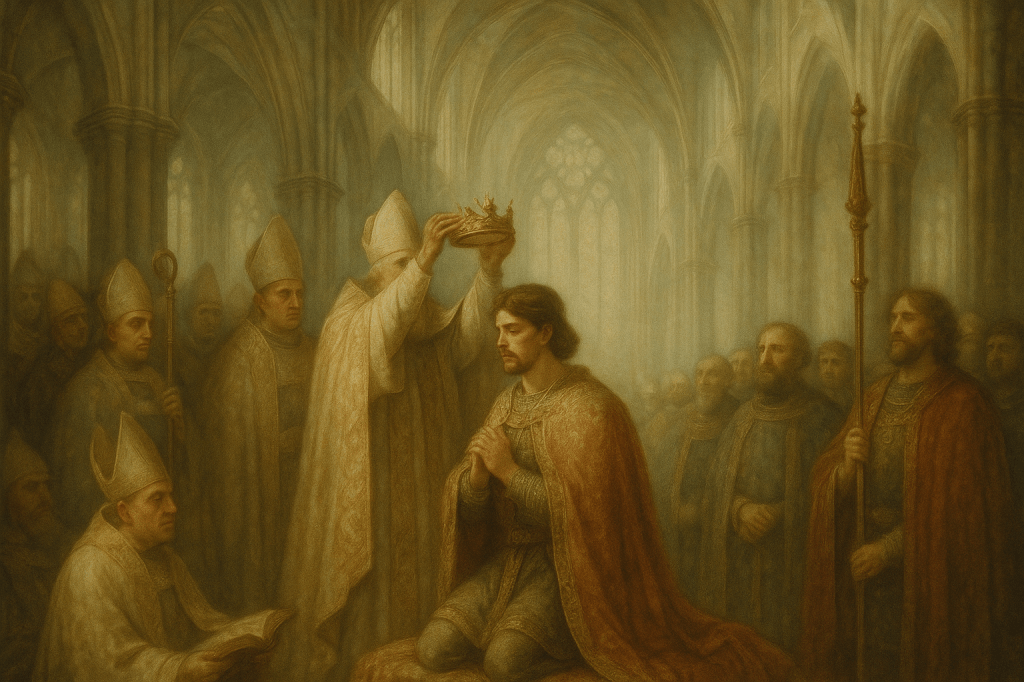
After 1066, England was no longer the England that Alfred, Athelstan, or Edward had known. The Norman Conquest had upended kingship, aristocracy, and culture. William the Conqueror ruled not just as a king but as a conqueror, and his dynasty would reshape the land, law, and literature for generations.
William’s victory at Hastings was only the beginning. He had to secure his new kingdom against rebellion and resistance. The north of England in particular resisted fiercely, leading to campaigns like the “Harrying of the North,” which left large areas depopulated.
Yet William was also a brilliant administrator. He introduced the feudal system in England, granting lands to his Norman followers while keeping ultimate control over the country. Castles rose across the landscape, symbols of power and authority, forever altering the physical and political map of England.
Culturally, the Normans brought the French language, which became the language of the court, law, and literature. This would profoundly influence English, layering it with new vocabulary and new literary forms.
William’s son William II, often called Rufus, ruled from 1087 to 1100. His reign was marked by tension with the church and barons, but he consolidated Norman control. He was less scholarly than his father, but his rule maintained stability in the kingdom.
Henry I (1100–1135), William’s younger brother, strengthened royal administration and law. He is famous for issuing the Charter of Liberties, an early attempt to limit the power of the monarchy, a precursor to the ideas that would later lead to the Magna Carta. Henry’s reign also encouraged the collection and preservation of documents, which contributed to England’s growing bureaucratic and literary culture.
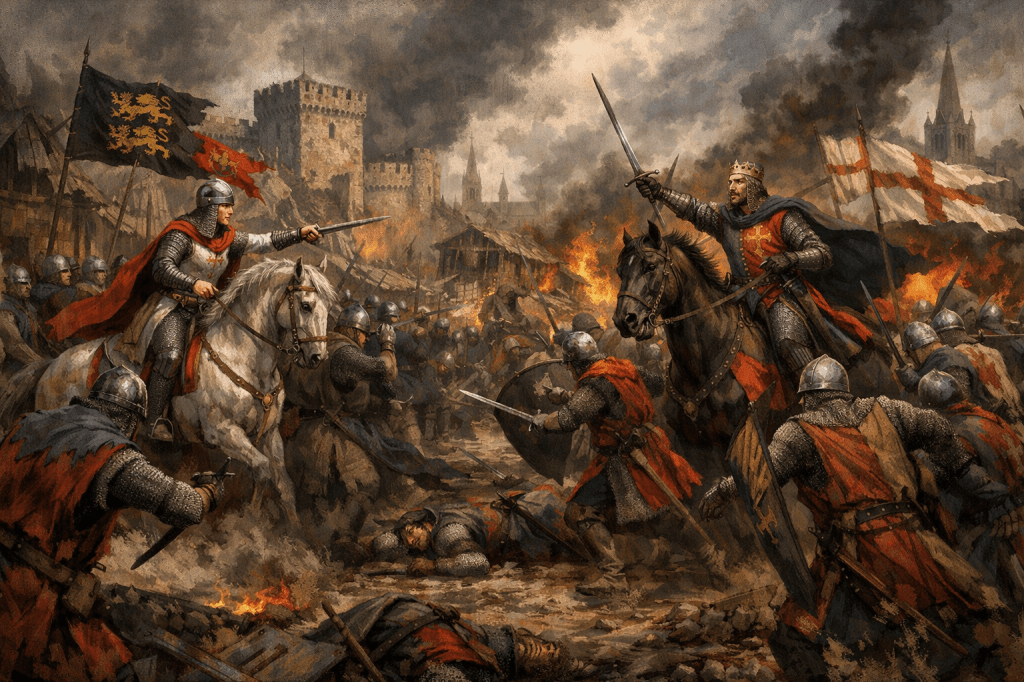
The succession crisis after Henry I’s death plunged England into a period known as “The Anarchy,” when Stephen of Blois and Empress Matilda fought over the throne. Civil war ravaged the country, and law and order often broke down.
Yet even in this chaos, culture and literature did not stop. Chronicles, poems, and religious writings continued to be produced, often reflecting the struggles of a kingdom divided. The turmoil also demonstrated the fragility of power, a theme that would echo in later English literature.
The Norman dynasty deeply transformed English literature. French-speaking elites brought new genres: courtly romance, epic poetry, and chronicles written in Latin or Anglo-Norman. At the same time, Old English traditions persisted among common people and in monastic writing.
This fusion created a literary environment rich with possibilities. England’s past—the Anglo-Saxon focus on heroism, fate, and morality—was not forgotten, but it began to mingle with continental sophistication, themes of courtly love, and a more outward-looking narrative style.
The Legacy of the Norman Dynasty
By the mid-12th century, the foundations for medieval English identity had been laid:
- A centralized monarchy with feudal structures.
- A multilingual society blending Anglo-Saxon and Norman influences.
- A literary culture ready to absorb new ideas while preserving older ones.
This was the England Chaucer would inherit: a country of layered history, complex kingship, and a literature ready to flourish. The Norman dynasty had changed the rules of the game, but it had also created the conditions for England to dream, write, and tell stories on a new scale.

 Honey & Prose 🍯🌸
Leave a comment