
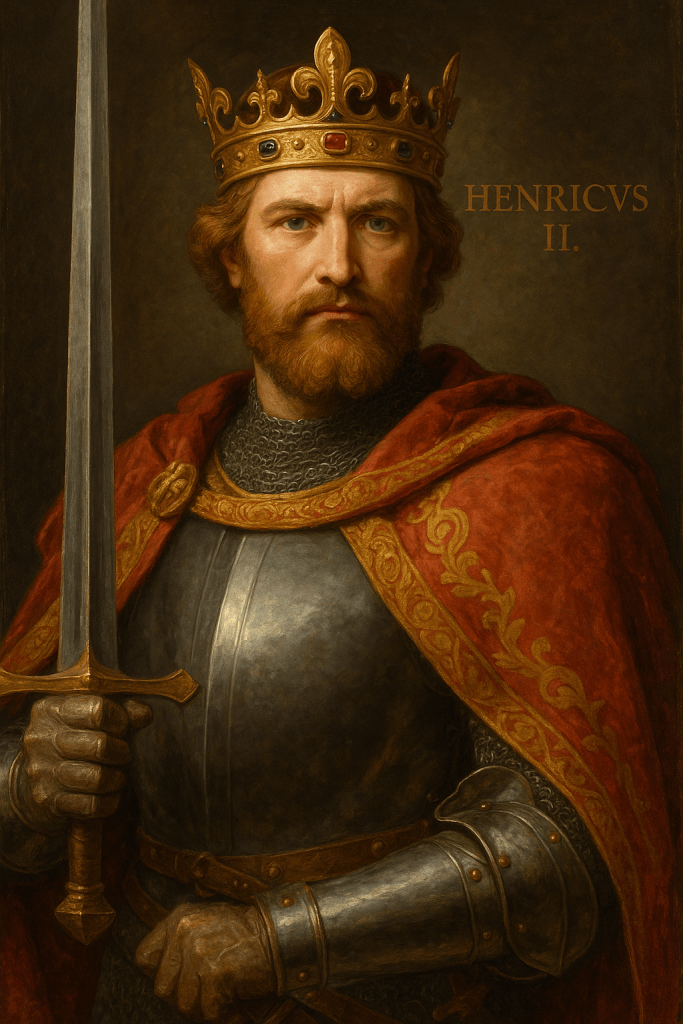
After the Norman dynasty, England was no longer a fragile land of conquest and survival. The Plantagenets, beginning with Henry II of England in 1154, would rule for over three centuries, and their reign reshaped the country politically, socially, and culturally. England became a place of ambition, law, literature, and story.
Henry II inherited a kingdom recovering from civil war. He was a king of contrasts. He was ruthless in politics, yet a patron of justice and administration. Under his rule, the foundations of English common law were laid. Courts were systematized, juries began to play a role, and the king’s authority became more structured.
But Henry’s reign was not only about law. His turbulent relationship with the church, especially Thomas Becket, captured the imagination of the kingdom. Becket’s martyrdom in 1170 became a story of loyalty, power, and faith and an echo of the Anglo-Saxon themes of heroism and moral consequence, now writ on a grander stage.
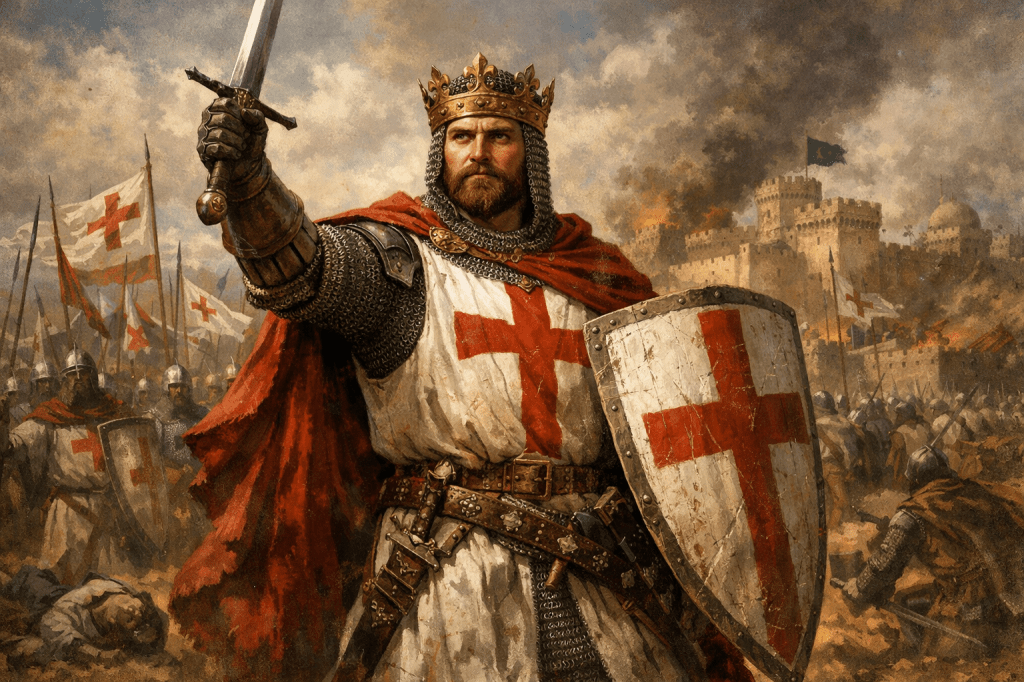
Henry’s son, Richard I of England, known as Richard the Lionheart, embodied the medieval ideal of heroism. He spent most of his reign abroad, leading armies in the Crusades, while England remained under the care of others.
Richard’s exploits fed the imagination of poets and chroniclers. Tales of chivalry, courage, and adventure became increasingly central to English literature. The Plantagenet court began to embrace not only political power but also cultural display—knightly ideals, romance, and spectacle became part of the kingdom’s identity.
Richard’s brother, John of England, known as John Lackland, is remembered for failures and tyranny. Heavy taxation, disputes with the church, and military defeats created a crisis of loyalty among the barons.
The result was the Magna Carta of 1215, a revolutionary document that limited the power of the king and affirmed certain rights for the nobility. It was not immediately fully respected, but its significance endured. English kings were now bound by law, and a new idea of governance, one that included negotiation and precedent was born.
By the late 13th and early 14th centuries, Plantagenet kings, including Edward I of England and Edward III of England, extended England’s influence across Europe, particularly through the wars in France.
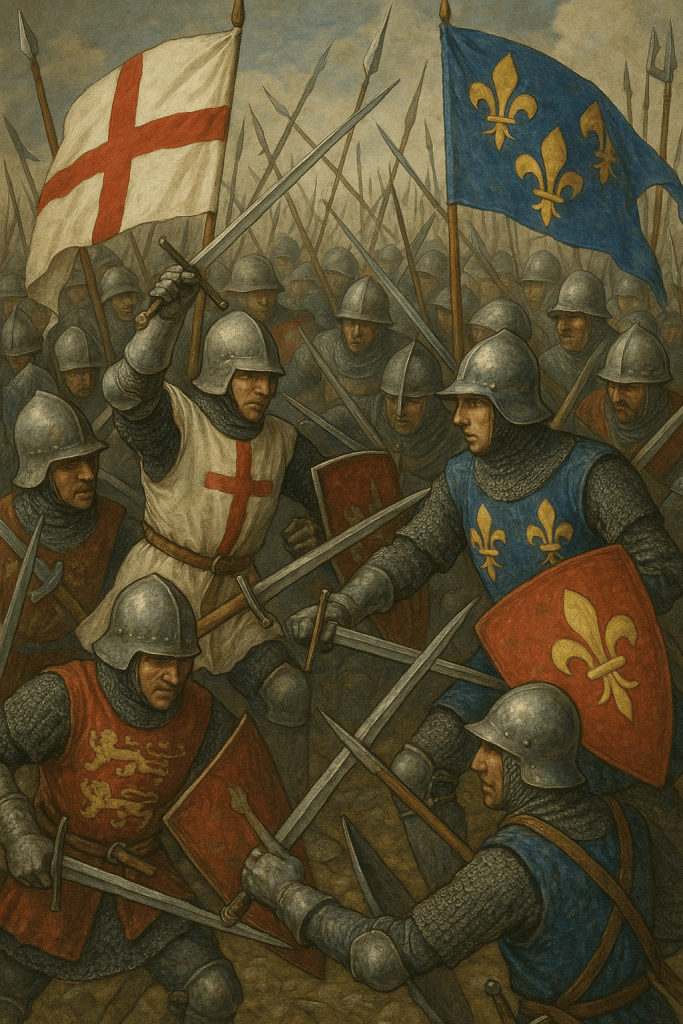
The Hundred Years’ War (1337–1453) helped to forge a sense of English identity. Tales of heroism, valor, and national pride flourished in literature. Chroniclers wrote histories, and poets dramatized battles. Legends like those of King Arthur and stories of chivalric knights became intertwined with contemporary politics.
The Plantagenets also presided over a profound literary evolution. The blending of Anglo-Saxon and Norman-French influences gave rise to Middle English. Chaucer’s world was built on the layers of Old English storytelling, Anglo-Norman poetry, and courtly romance introduced during Plantagenet rule.
In monasteries, scribes preserved histories and religious texts. In courts, poets and troubadours composed tales of knights, love, and morality. From heroic epics to allegories and romances, the Plantagenet period cultivated a literary richness that would directly feed into the flowering of English literature in the late 14th century.
When Edward III died in 1377, his grandson Richard II of England ascended the throne as a child. Richard II inherited a kingdom exhausted by war and plague, and the Black Death had recently decimated the population. Labor shortages caused social upheaval, creating opportunities for revolt. The Peasants’ Revolt of 1381 reflected widespread dissatisfaction with taxation, feudal obligations, and the rigid social hierarchy.
Richard II’s reign was also marked by conflict with powerful nobles. His reliance on favorites and attempts to assert royal authority over them led to political instability. Eventually, his cousin Henry Bolingbroke challenged him, deposing Richard in 1399 and becoming king. This was the first time in centuries that a reigning English monarch was forcibly removed by a noble, setting a precedent for civil strife.
Henry IV’s reign (1399–1413) was defined by rebellion and consolidation. Multiple uprisings, including those led by disgruntled nobles and the powerful Percy family in the north, tested the young king’s authority. At the same time, England’s involvement in France continued under intermittent campaigns, though less decisively than in Edward III’s time.
Henry V (1413–1422) revived England’s military ambitions. His campaigns in France were remarkable, culminating in the famous victory at Agincourt in 1415. Agincourt became legendary for the skill of English longbowmen and the apparent heroism of the king himself. Henry V’s victories temporarily strengthened English claims in France and inspired chroniclers and poets. Tales of courage, strategy, and divine favor filled English literature, reinforcing the themes of heroism and national pride.
After Henry V’s untimely death in 1422, his infant son Henry VI of England inherited the throne. A child king ruling over both England and territories in France created a fragile political situation. Regents governed in his name, and rival factions among the nobility vied for influence. This period saw increasing instability and marked the beginning of internal conflicts that would eventually erupt into the Wars of the Roses.
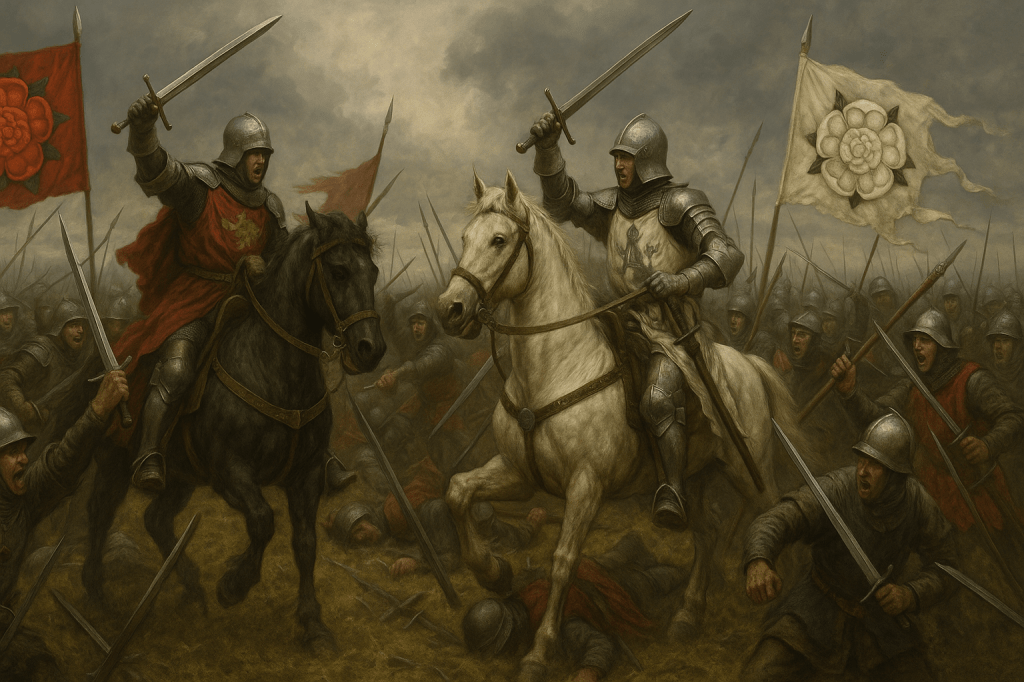
Henry VI’s minority, combined with his later weak rule, left the kingdom vulnerable. France gradually reclaimed English-held territories, ending much of the hope of a unified Anglo-French empire. Meanwhile, domestic politics were poisoned by rivalries, betrayals, and power struggles. The stage was set for decades of dynastic conflict that would dominate England for much of the 15th century.
The Plantagenets left England stronger, more unified, and more culturally complex than it had ever been. Kingship had matured, law had developed, and literature had evolved. The tensions of war, the ideals of chivalry, the influence of church and state, and the interplay of English and French language all set the stage for the next literary golden age.
By the time of Geoffrey Chaucer, England had a living, breathing literary tradition shaped by centuries of political and cultural growth. The stories of kings, warriors, and poets of the Plantagenet age were not just history—they were the foundation of English imagination.

 Honey & Prose 🍯🌸
Leave a comment