
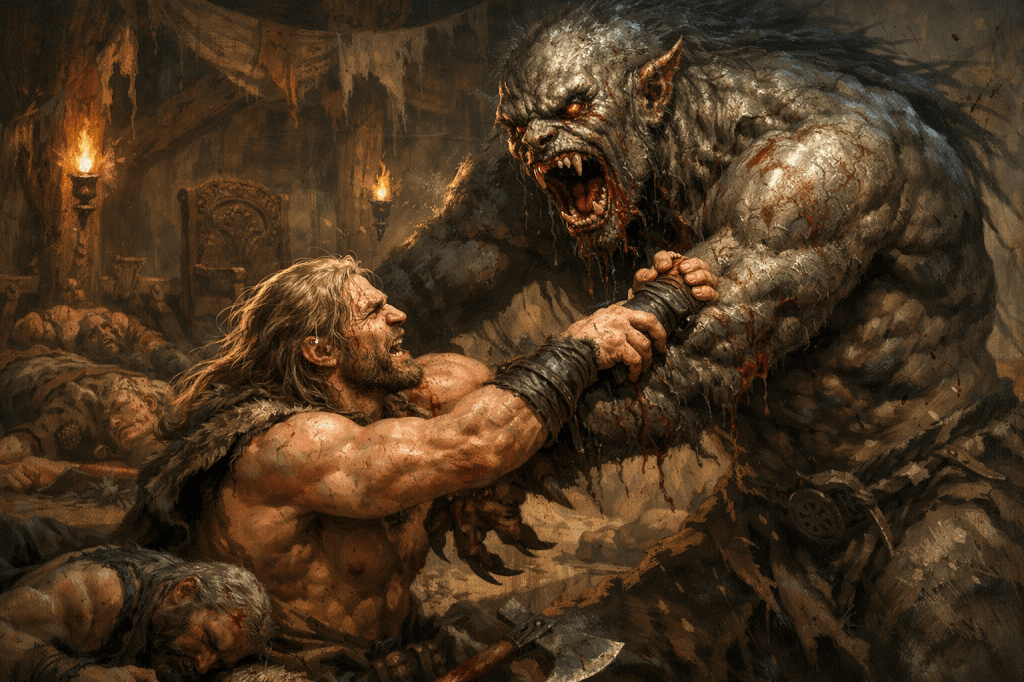
Long before Chaucer’s pilgrims walked the roads of England, long before castles and kings shaped the medieval landscape, stories were told around fires in great halls. The greatest of these stories, the one that has survived across centuries, is Beowulf.
Beowulf is an epic poem written in Old English, the language of the Anglo-Saxons, sometime between the 8th and 11th centuries. Its origins are older, though—the story itself had been told orally for generations before anyone wrote it down. It was carried in memory from one storyteller to another, shaped by each recitation, until it found its permanent home in a manuscript now preserved in the Nowell Codex, a collection of texts from the early medieval period.
The world of Beowulf is the world of the early Anglo-Saxons. England was not yet a unified kingdom. Small tribal territories, raided and defended, dotted the landscape. Loyalty to lords, courage in battle, and the fame of one’s deeds mattered more than wealth or comfort. In this world, a hero’s reputation could outlast death itself, because memory was a kind of immortality.
The poem recounts the deeds of Beowulf, a warrior who comes to the aid of a troubled kingdom. He battles monsters that threaten people and lives in a society defined by kinship, honor, and fate. Yet the poem is more than just a tale of battles. It captures the beliefs, fears, and values of a people living on the edge of survival, blending pagan and early Christian ideas that were coming together in Anglo-Saxon England.
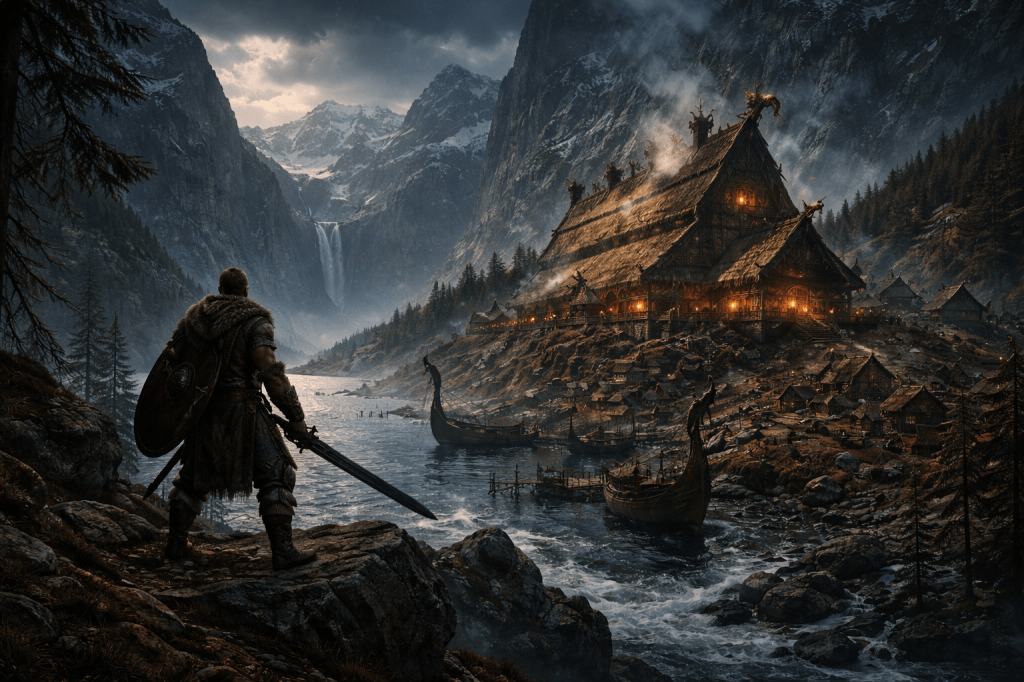
Beowulf is remarkable not only for its story but for its survival. The manuscript has endured for over a thousand years, through wars, fires, and the passage of time. It is the longest epic poem in Old English, and it gives us a window into a world otherwise almost lost to history. Through Beowulf, we see the heroic ideals of early England, the importance of storytelling, and the roots of a literary tradition that would eventually lead to the great works of medieval England.
The poem’s history is entwined with the culture that produced it. Written in a time when literacy was rare and storytelling was communal, Beowulf reflects the society that valued strength, loyalty, and honor above all else. It survived because it mattered—because heroes mattered, and because stories were the way a people preserved themselves against time.
Today, Beowulf is not just an artifact. It is a bridge to the past, a glimpse of Anglo-Saxon England, and the foundation upon which English literature would grow. It reminds us that even in a world of uncertainty and danger, people have always told stories to make sense of life, courage, and mortality.
In the next article, we will dive deeper into the epic with a literary lens and dissect it to the best of our abilities.

 Honey & Prose 🍯🌸
Leave a comment