
In 2025, I found myself repeatedly drawn to stories that lived in the shadows.
Not horror in its modern, sensational sense but something older, quieter and far more psychological. Ruins instead of jump scares. Obsession instead of violence. Fear not as spectacle, but as atmosphere. What I was gravitating toward had a name I already knew, but had never fully explored: Gothic literature.
To understand why this genre has endured for centuries and why it continues to feel strangely relevant — it helps to look at where it came from, what it feared and what it revealed about the human mind.
What Is Gothic Literature?
Gothic literature is a genre that explores fear, uncertainty and the darker edges of human experience through atmosphere, setting and psychology rather than overt horror alone. It blends the emotional with the uncanny, the rational with the supernatural and often places ordinary individuals in extraordinary, unsettling circumstances.
At its core, Gothic literature is less about monsters and more about states of mind.
Recurring elements include:
- Isolated or decaying settings (castles, monasteries, ruins, remote estates)
- A pervasive sense of dread or unease
- Secrets, forbidden knowledge or unresolved pasts
- Conflicted protagonists, often emotionally or morally unstable
- The tension between reason and imagination, science and superstition
Origins: The Gothic Novel of the 18th Century
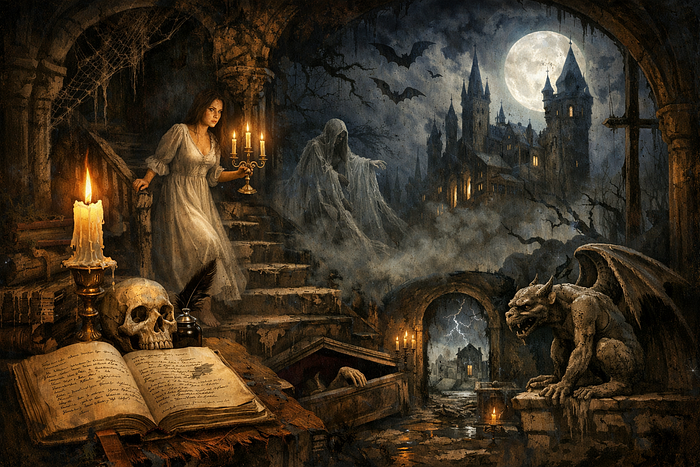
The Gothic genre emerged in late 18th-century England, during a period of immense cultural change. The Enlightenment had championed reason, science and order but Gothic literature arose as its shadow, giving form to anxieties that rationality could not fully suppress.
The genre is generally considered to begin with Horace Walpole’s The Castle of Otranto (1764), a novel that deliberately blended medieval settings with supernatural events. Walpole described it as an attempt to combine “ancient romance” with modern realism, a tension that would become central to Gothic writing.
Early Gothic novels often featured:
- Medieval or pseudo-medieval settings
- Tyrannical authority figures
- Imprisoned or threatened heroines
- Supernatural occurrences
Ann Radcliffe, one of the most influential early Gothic writers, refined the genre by emphasizing psychological terror over explicit horror. Her novels such as The Mysteries of Udolpho, relied heavily on atmosphere, suspense and emotional anticipation, shaping Gothic fiction into a space for internal fear rather than external threat.
Romanticism and the Inner Darkness
As Gothic literature evolved, it became closely intertwined with Romanticism. Writers began shifting their focus inward, using Gothic elements to explore emotion, identity and moral conflict.
This period produced some of the genre’s most enduring works.
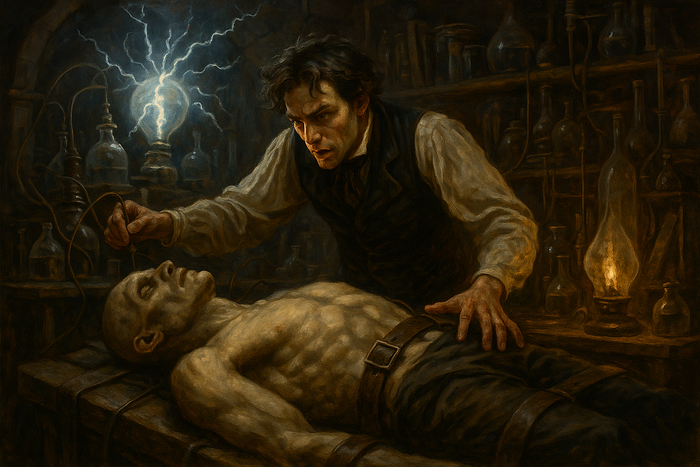
Mary Shelley’s Frankenstein (1818) redefined Gothic fiction by merging it with emerging scientific thought. The novel replaces medieval superstition with modern anxiety about creation, responsibility and the limits of human knowledge. The terror comes not from the monster’s existence, but from abandonment and moral failure.
Similarly, Gothic poetry and prose of the Romantic era often grappled with isolation, obsession and the sublime, the overwhelming sense of awe and terror inspired by nature, vastness, and the unknown.
The Victorian Gothic: Science, Empire and Repression
The Victorian era gave Gothic literature a new set of fears.
Industrialisation, urbanisation, scientific advancement and the expansion of empire reshaped society and Gothic fiction absorbed the anxieties that came with them. Respectability clashed with repression. Progress existed alongside moral panic.
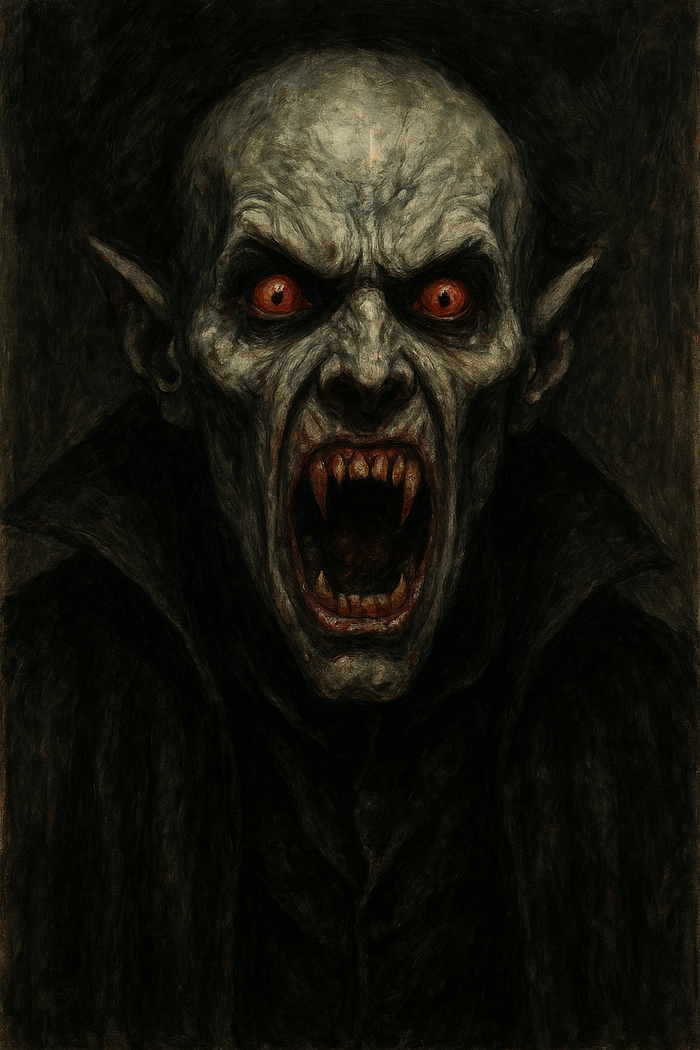
Bram Stoker’s Dracula (1897) exemplifies this phase of Gothic literature. The novel reflects fears surrounding degeneration, foreign influence, sexuality, disease and the limits of scientific rationality. Its fragmented, documentary-style narrative mirrors a world trying to impose order on chaos, but failing.
Other Victorian Gothic works explored similar tensions:
- The double self (The Strange Case of Dr Jekyll and Mr Hyde)
- Madness and confinement
- The fragility of identity beneath social respectability
The Gothic no longer lived only in castles. It moved into cities, laboratories and domestic spaces.
Key Themes That Define the Gothic
Across its many forms, Gothic literature consistently returns to certain concerns:
Fear of the Unknown — whether supernatural, psychological or scientific
Transgression — moral, social or intellectual boundaries being crossed
Isolation — physical, emotional or existential
The Past Haunting the Present — secrets, guilt, inherited trauma
The Unreliable Mind — madness, obsession, distorted perception
These themes allow Gothic literature to adapt to new eras while retaining its emotional core.
Why Gothic Literature Still Matters
Gothic literature endures because it speaks to moments of uncertainty.
Whenever societies face rapid change, whether its scientific, political, or moral, the Gothic resurfaces. It gives language to anxiety. It questions progress. It exposes the cost of repression and unchecked ambition.
Modern Gothic fiction may look different on the surface, but it still asks the same questions:
- What happens when knowledge outpaces wisdom?
- What do we repress to appear civilised?
- What parts of ourselves refuse to stay buried?
In falling in love with Gothic literature, I wasn’t escaping into darkness.
I was encountering a genre that takes fear seriously as a means of understanding the human condition.
The Gothic does not offer comfort.
It offers clarity, through shadow.

 Honey & Prose 🍯🌸
Leave a comment