books
-
History and Literature of Renaissance England Part 4: The Stuarts
The Stuart period begins with James I of England, who also ruled as James VI of Scotland. For the first time, England and Scotland are united under one crown. James believes strongly in the divine right of kings. In simple terms, he sees monarchy as something granted by God, not something to be questioned by… Continue reading
-
History and Literature of Renaissance England Part 3: William Shakespeare
Shakespeare was born in Stratford-upon-Avon, a market town far from the political center of England. His background was not aristocratic, yet he received a solid education grounded in classical texts, which would later influence his writing. When he moved to London, he entered a city that was rapidly becoming the cultural heart of England. Theaters… Continue reading
-
History and Literature of Renaissance England Part 2: The Tudors
The Tudor story begins at the end of the Wars of the Roses. England had been torn apart by decades of conflict between rival noble houses. When Henry VII took the throne in 1485, his first priority was simple: control. He reduced the power of the nobility, strengthened the monarchy, and focused heavily on financial… Continue reading
-
Road to Chaucer: History and Literature of Early England Part 10: The Canterbury Tales
By the time we reach Geoffrey Chaucer, English literature feels like it has been speaking in distant voices for centuries. Old English poetry carried the weight of heroism and fate. Middle English writing leaned heavily on religion and moral instruction. Much of it feels formal, even a little removed from everyday life. Then suddenly, everything… Continue reading
-
Road to Chaucer: History and Literature of Early England Part 4: Summary of Literature in Roman Britain
Before the Anglo-Saxons arrived in full force and Old English began to be written down, England had already experienced centuries of cultural contact, oral storytelling, and early written records. Understanding this “literary prehistory” helps us trace the roots of medieval English literature. When the Romans arrived, they brought Latin, the language of administration, law, and… Continue reading
-
Order, Absurdity and the Quiet Evolution of a Reader

This year, I set myself a simple, steady goal: twenty-six books. Two a month, with a couple of extras saved for summer, when time loosens a bit and I get more time for myself. For January, I chose two books that could not be more different, yet somehow felt perfectly matched for the way my… Continue reading
-
Three Books That Changed The Way I Read (and Write) In 2025

I didn’t realise my reading had changed until I tried to go back. Sometime in 2025, the way I moved through books shifted quietly but permanently. I stopped reading only for immersion or escape. I began reading with questions in mind. I started noticing structures, absences, contradictions. I found myself lingering not just on what… Continue reading
-
A Brief History Of Gothic Literature: Shadows, Fear and the Human Mind
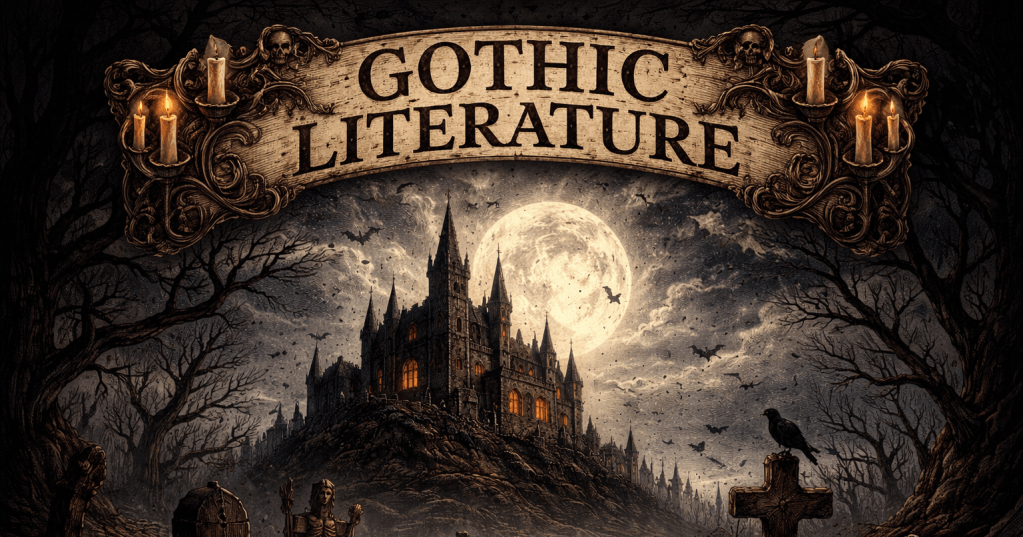
In 2025, I found myself repeatedly drawn to stories that lived in the shadows. Not horror in its modern, sensational sense but something older, quieter and far more psychological. Ruins instead of jump scares. Obsession instead of violence. Fear not as spectacle, but as atmosphere. What I was gravitating toward had a name I already… Continue reading
 Honey & Prose 🍯🌸