

I didn’t realise my reading had changed until I tried to go back.
Sometime in 2025, the way I moved through books shifted quietly but permanently. I stopped reading only for immersion or escape. I began reading with questions in mind. I started noticing structures, absences, contradictions. I found myself lingering not just on what a story was saying, but how it was built and what kind of work sat beneath the surface.
Three books, in particular, altered my relationship with reading and, unexpectedly, with writing.
They were Dracula by Bram Stoker, Frankenstein by Mary Shelley, and Northanger Abbey by Jane Austen.
They are very different novels. Different tones, different ambitions, different emotional temperatures. But together, they reshaped the way I approach fiction: as something researched, constructed, and courageously imperfect.
Dracula: Where Research Became Seductive
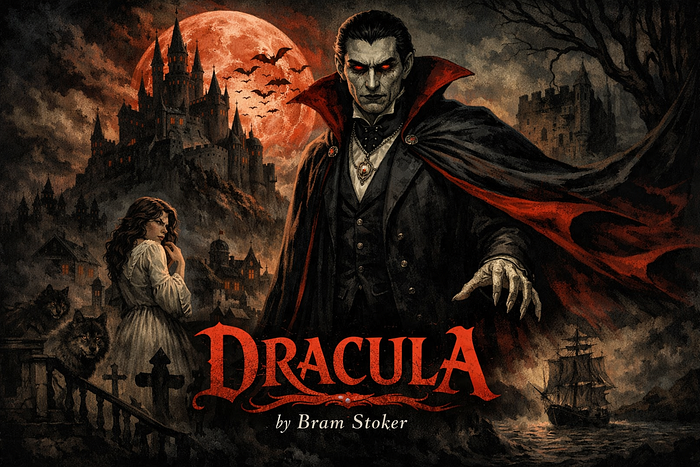
Reading Dracula was the first time I became acutely aware of how much work a novel can hide.
On the surface, it is a gothic horror story — dramatic, unsettling and atmospheric. But as I read, I began to notice the scaffolding beneath the story. The careful use of documents. The geographical precision. The medical, legal, and folkloric knowledge woven quietly into the narrative.
Stoker’s novel made me realise that historical fiction and gothic fiction especially, gains its power not from excess, but from accuracy. The more grounded the world, the more terrifying its distortions become.
After Dracula, I found myself wanting to research before writing. I wanted to know how people lived, travelled, spoke, feared, and understood the world they inhabited. I became interested in maps, letters, customs, and forgotten anxieties. Fiction stopped feeling like invention alone and began to feel like excavation.
After doing more research into the author’s life, I was amazed at how things around you can inspire you and give you ideas that can be embedded into a story. I found out that Stoker originally wanted to name the novel “The Undead”, but upon stumbling across a history book in a library in Whitby, he saw that Vlad the Impaler (who scholars believe was one of the inspirations for the character Dracula), was called the “Son of the Dracul”, that’s where we got the name Dracula.
A writer can be inspired by the most normal, average, day to day thing. A writer’s imagination is able to pick such ordinary things and turn them into something extraordinary. Dracula is such an extraordinary and original story that came from mutiple sources of inspiration, some from history, some from folklore, and some from the authors personal experience in life. This books not only made me fall in love with the Gothic genre, but also inspired me to put in more work into my writing.
Frankenstein: Where Imagination Met Responsibility
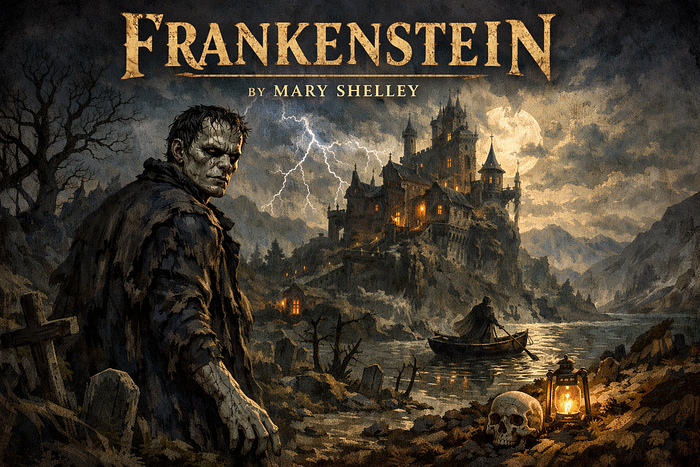
If Dracula taught me discipline, Frankenstein taught me restraint.
Mary Shelley’s novel unsettled me in ways I hadn’t anticipated. It is often discussed as a cautionary tale about science, but what struck me most was its emotional and philosophical precision. The horror is not rooted in spectacle, but in abandonment. The science is not triumphant. It is anxious, morally fraught, and incomplete.
This was gothic fiction thinking deeply.
Frankenstein made me realise that speculative ideas carry weight. That imagination, especially when it brushes against science, ethics or progress, demands accountability. Shelley does not ask whether something can be created but she asks what happens after it is.
As a reader, this changed the way I approached science-inspired narratives. As a writer, it changed what I felt responsible for on the page. I became more interested in consequences than concepts, in emotional aftermath rather than dramatic events.
It pushed me toward a kind of fiction that is both dark and thoughtful where wonder and dread coexist and where curiosity is never free of cost.
Northanger Abbey: Learning to Love Imperfection
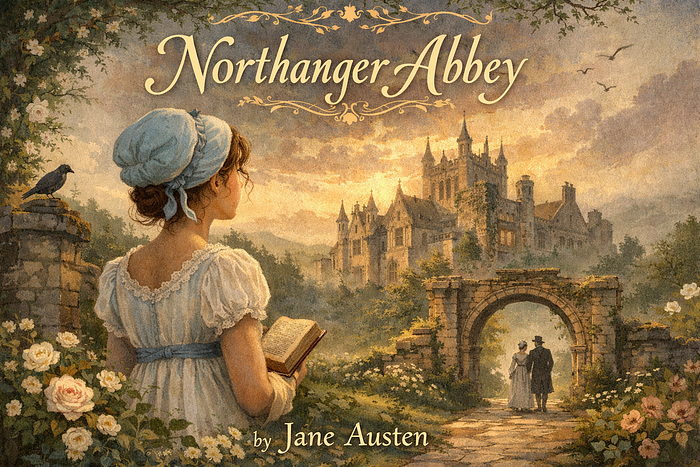
Northanger Abbey surprised me.
It is lighter than the other two novels, more playful, more openly ironic. And yet, it may have been the most liberating.
Catherine Morland is not impressive. She is naive, imaginative, occasionally foolish, and deeply sincere. Austen does not polish her into an ideal heroine. She allows her to be wrong, sometimes embarrassingly so.
Reading this novel made me realise how often we ask our characters to be admirable rather than truthful.
Northanger Abbey gave me permission to write flawed characters without immediately redeeming them. To let them misunderstand the world. To let them project fantasies where none belong. To let them grow slowly, awkwardly and imperfectly.
It reminded me that realism is not the absence of imagination but the honest portrayal of how imagination misleads as often as it illuminates.
What These Books Gave Me
Taken together, these three novels changed not just what I read, but how I read.
They taught me that fiction is not a single act of inspiration, but a convergence of research, responsibility, and restraint. That darkness gains power from precision. That imagination works best when it is anchored and when it is allowed to fail.
Most importantly, they blurred the boundary between reader and writer. I no longer read as a passive recipient. I read as someone in dialogue with the text, attentive to its choices and aware of my own.
These books did not make me want to write more.
They made me want to write better.
And that, I think, is the most lasting kind of change a book can bring for a writer.

 Honey & Prose 🍯🌸
Leave a comment