
Before the Anglo-Saxons arrived in full force and Old English began to be written down, England had already experienced centuries of cultural contact, oral storytelling, and early written records. Understanding this “literary prehistory” helps us trace the roots of medieval English literature.
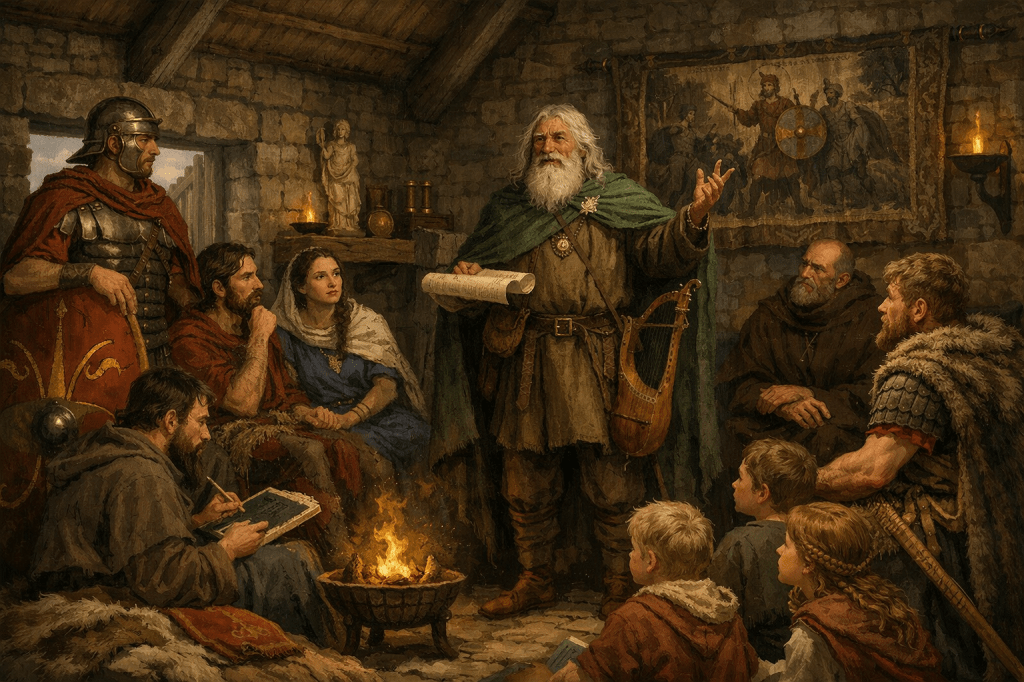
When the Romans arrived, they brought Latin, the language of administration, law, and literature. Latin inscriptions, official documents, and occasional letters represent the first surviving written records in Britain.
Key examples include:
- Inscriptions on milestones and altars, often commemorating emperors, victories, or civic achievements.
- Monumental inscriptions in towns like Londinium and Verulamium, recording civic life, public works, and the names of Roman governors.
Latin was largely the language of the elite, but it left an enduring influence. Many Latin words entered the English language later, and Roman literary conventions shaped early British literacy.
Roman authors wrote about Britain, even if indirectly:
- Julius Caesar described the island in his Commentarii de Bello Gallico, offering early ethnographic notes about Celtic tribes.
- Tacitus, in his biography Agricola, recorded the life of his father-in-law, the governor of Britain, and offered observations on local customs and resistance to Roman rule.
Though these works were in Latin, they preserved knowledge of Britain’s people and landscapes, providing a literary bridge between oral Celtic traditions and the later written records of the Anglo-Saxons.
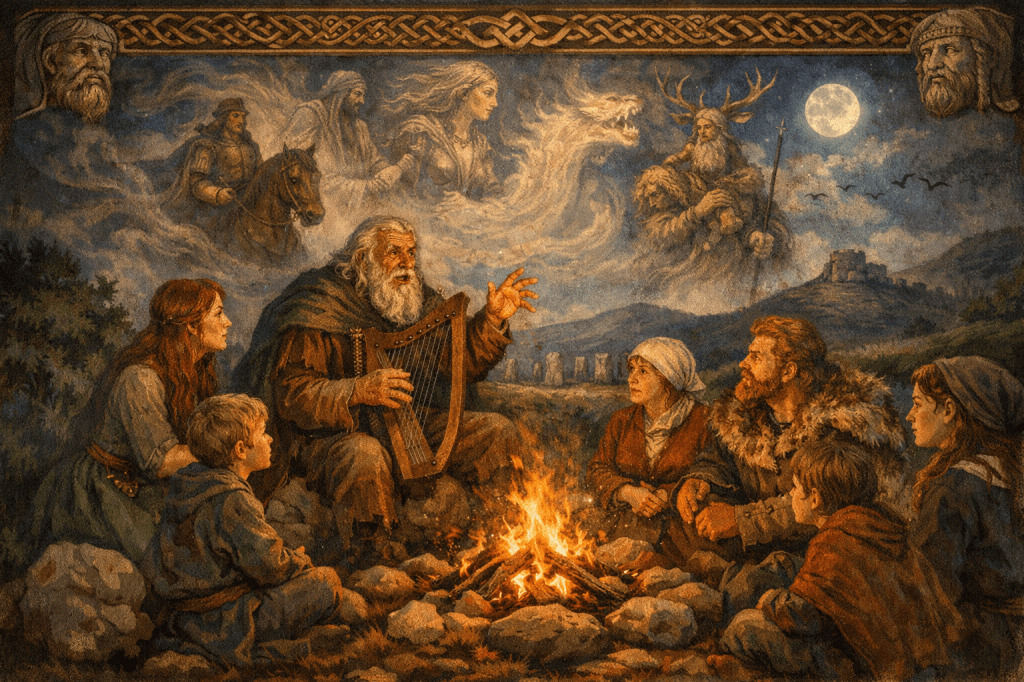
Written texts were rare, but oral culture thrived:
- Celtic tribes preserved mythical histories and heroic tales orally.
- Stories of tribal wars, magical figures, and legendary leaders circulated around fires, in ceremonies, or during seasonal festivals.
- Themes like heroism, loyalty, honor, and the supernatural dominate these stories—motifs that survive in later works like Beowulf and Arthurian legends.
It’s important to remember that literature existed long before writing: the Celts’ oral narratives were the literary DNA of England.
By the late Roman period, Christianity began spreading in Britain. Monastic communities preserved literacy and introduced religious texts in Latin, including:
- Prayers and hymns
- Biblical translations and commentaries
- Hagiographies (lives of saints)
These early texts show how religion and literacy were intertwined, setting the stage for the monastic scribes who would later record Old English poetry.
Key Features of Pre–Anglo-Saxon Literature
| Feature | Description |
|---|---|
| Language | Mostly Latin, some oral Celtic vernacular |
| Form | Inscriptions, official records, prayers, heroic tales |
| Themes | Heroism, tribe and clan loyalty, divine intervention, morality |
| Transmission | Written for elites (Latin); orally for communities (Celtic) |
Even though nothing survives in Old English yet, these literary practices shaped Anglo-Saxon culture. The transition from oral Celtic stories to Old English poetry shows continuity and adaptation—the heroic motifs, moral themes, and storytelling techniques all carry forward.
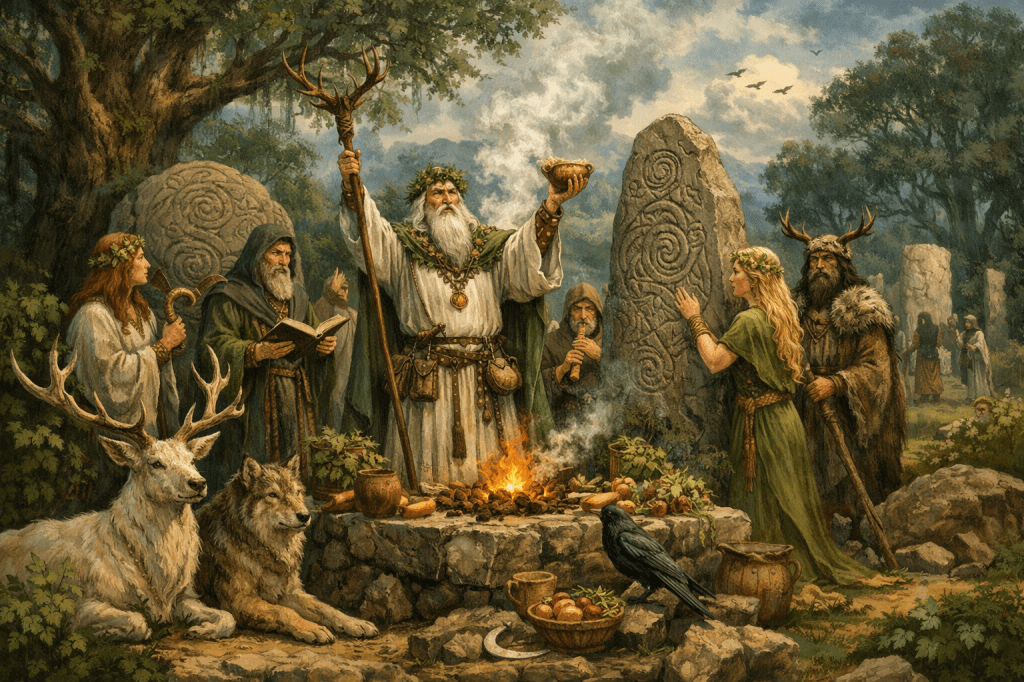
Pre-Anglo-Saxon England shows us the roots of English storytelling:
- The oral heroic tradition influenced Beowulf and other epic poetry.
- Latin literacy influenced monastic scholarship and the recording of texts.
- Early Christian writing introduced moral and allegorical frameworks that recur throughout medieval literature.
In short, the literary world before the Anglo-Saxons was a blend of Celtic imagination, Roman writing, and early Christian thought, forming a foundation that medieval authors would build upon.
The Celtic period and the Roman period are two fascinating era in English history which definitely left its mark in the culture, language and literary tradition in the country. Later when we look at the Anglo Saxon period, one interesting opinion brought forward by historians is that, one the contrary to the popular belief that the Anglo Saxon invasion resulted in a full ethnic cleanse, it is now believed that that they interbred, inter mingled with the existing English population. They incorporated the English way of life into their own Germanic lifestyle and created a hybrid culture. This means the pre Anglo Saxon culture may have influenced the later literature we find in the Anglo Saxon period. A lot of fascinating theories and findings await for us to unravel in this series. See you soon with the next article.

 Honey & Prose 🍯🌸
Leave a comment