
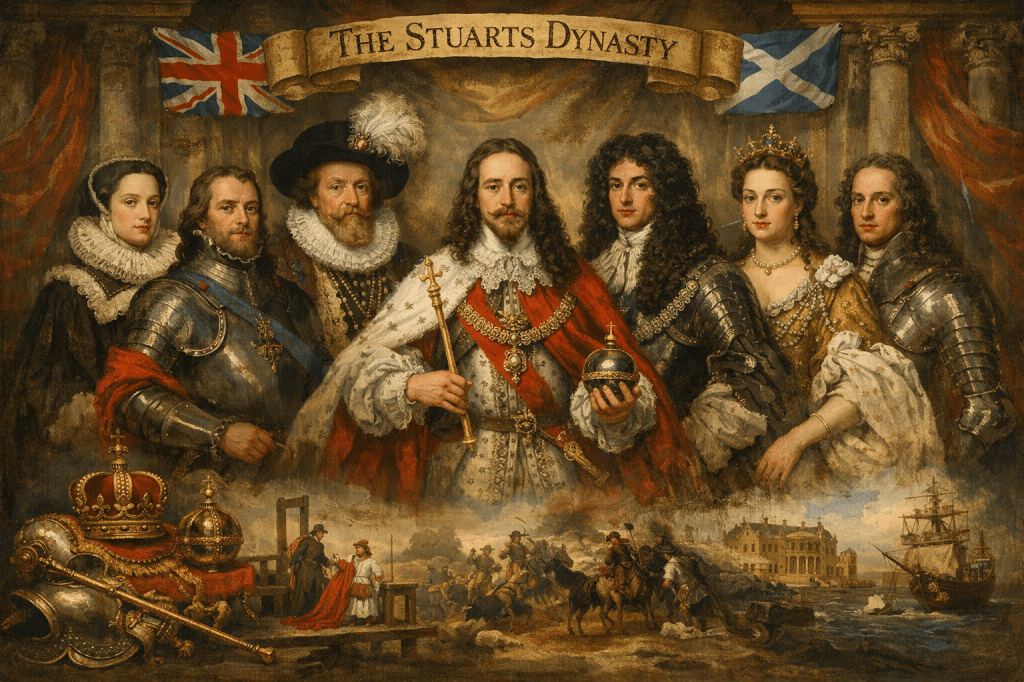
The Stuart period begins with James I of England, who also ruled as James VI of Scotland. For the first time, England and Scotland are united under one crown.
James believes strongly in the divine right of kings. In simple terms, he sees monarchy as something granted by God, not something to be questioned by Parliament or the people.
This belief creates immediate tension.
England, especially after the Tudor period, is not entirely comfortable with unchecked royal authority. Parliament is becoming more assertive. Religious divisions remain unresolved. The result is a slow but growing conflict between crown and country.
Religion continues to shape political life in powerful ways.
The Protestant Church of England is firmly established, but there are divisions within it. Some want further reform. Others resist change. Catholics remain under suspicion, especially after events like the Gunpowder Plot, an attempt to assassinate the king and blow up Parliament.
This climate of fear and mistrust seeps into literature.
Writers begin to explore uncertainty more deeply. Faith is no longer just a source of stability. It becomes something questioned, debated, and sometimes feared.
Tensions reach a crisis under Charles I of England.
Like his father, Charles believes in strong royal authority. But his conflicts with Parliament become more direct and more severe. Disputes over taxation, religion, and governance escalate over time.
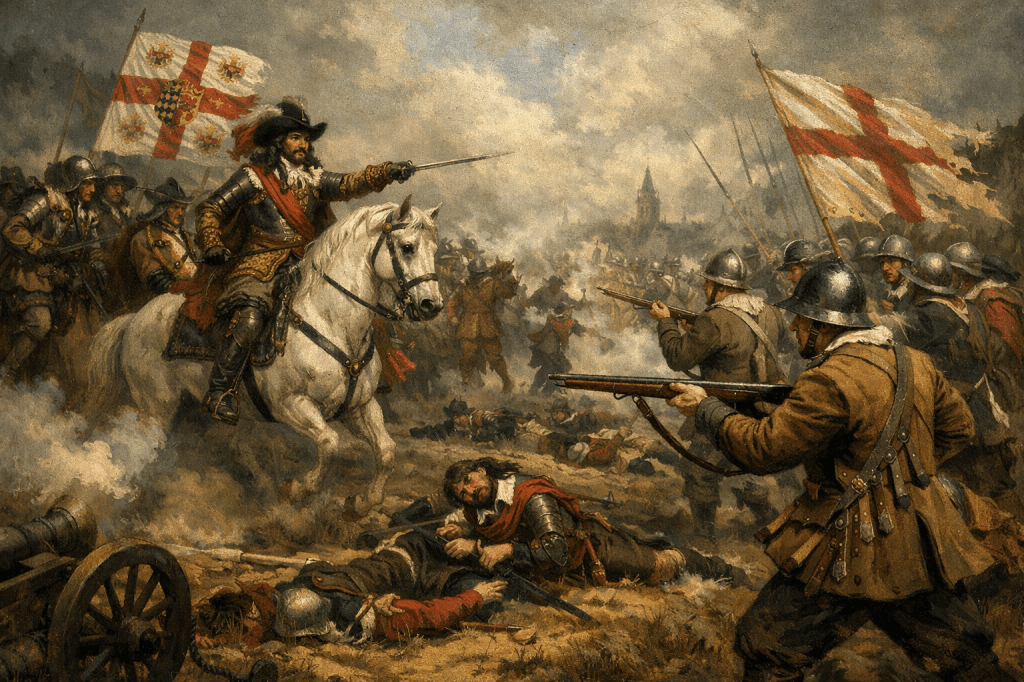
Eventually, this leads to the English Civil War.
This is not just a political disagreement. It is a national fracture. Families, communities, and regions take sides. The idea of monarchy itself is challenged in a way that would have been almost unthinkable a century earlier.
The outcome is extraordinary. Charles I is executed. England briefly becomes a republic under Oliver Cromwell.
For a society built on hierarchy and tradition, this is a profound shock.
Literature in a Time of Uncertainty
As the political world becomes unstable, literature reflects that instability.
One of the most distinctive movements of this period is the rise of Metaphysical poetry.
Writers like John Donne use complex imagery, intellectual argument, and surprising comparisons to explore love, faith, and mortality. Their poetry is less smooth and decorative than earlier Renaissance work. It is sharper, more questioning, and often more personal.
At the same time, other poets respond differently.
The Cavalier poets, including Robert Herrick, focus on themes like loyalty, beauty, and the enjoyment of life. Their work often supports the royalist cause and reflects a desire to preserve a sense of order and elegance.
Then there is John Milton, whose work stands at the intersection of politics, religion, and literature. Writing during and after the Civil War, Milton engages directly with the upheavals of his time. His later work, especially Paradise Lost, explores rebellion, authority, and the nature of freedom on a grand scale.
The Closing of the Theaters
One of the most striking cultural shifts during this period is the closure of theaters.
Under Puritan influence, especially during Cromwell’s rule, public theaters are shut down. Drama, which had flourished under Elizabeth and Shakespeare, is seen as morally suspect.
This marks a sharp break.
The lively, public world of performance gives way to more private forms of writing. Poetry and prose become more central. Literature turns inward, focusing more on thought, belief, and personal experience.
Society and Everyday Life
Life in Stuart England is shaped by uncertainty.
Social hierarchy still exists, but it feels less secure. War disrupts daily routines. Political allegiance can affect personal safety. Religion influences not just belief but identity and loyalty.
At the same time, there are ongoing changes:
- Literacy continues to grow
- Printed material becomes more widespread
- Political and religious ideas circulate more freely
For the first time, large numbers of people are actively engaging with debates about governance, rights, and belief.
What Inspired Stuart Literature
Writers of this period draw inspiration from a world in flux.
- Religious conflict pushes them to explore faith more deeply
- Political upheaval raises questions about authority and justice
- Scientific curiosity, emerging through figures like Francis Bacon, encourages new ways of thinking
- Personal experience becomes a more central focus
There is less certainty and more questioning. Literature becomes a space where complex ideas can be tested and expressed.
The Restoration and a Shift in Tone
After Cromwell’s death, the monarchy is restored with Charles II of England.
With his return, theaters reopen, and cultural life begins to recover. But the tone has changed. The optimism of the early Renaissance is gone. In its place is a sharper awareness of human weakness and political instability.
Restoration literature often reflects wit, satire, and a more skeptical view of society.
Closing Thought
The Stuart period is not defined by calm progress. It is defined by conflict, questioning, and transformation.
If the Tudors built the stage and Shakespeare filled it with life, the Stuarts test how strong that stage really is.
Literature does not retreat in this moment. It adapts. It becomes more introspective, more argumentative, and more aware of the uncertainties of the world.
By the end of the period, England is no longer the same country it was at the start.
And neither is its literature.


Leave a Reply